
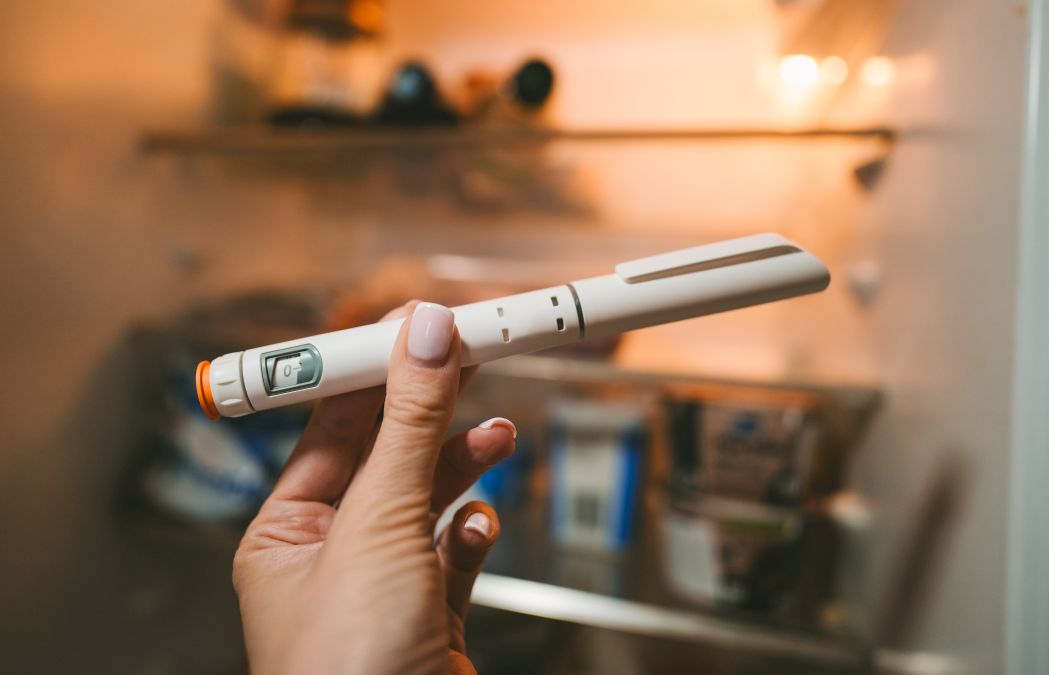
Most people who start a GLP-1 medication are bracing for nausea. Maybe some fatigue. Maybe a rough first month. What almost nobody is told is that a small number of patients wake up one morning and find that the vision in one eye is simply gone — no pain, no warning, no way to get it back.
The condition has a name that most Atlanta patients have never heard: non-arteritic anterior ischemic optic neuropathy, or NAION. It is showing up in medical journals, in regulatory reviews across Europe and Australia, and now in a growing federal court docket. It is not, as of this writing, on the U.S. label for Ozempic or Wegovy.
That gap between what researchers know and what patients are told is exactly where product liability law lives.
What NAION Actually Does to the Optic Nerve
The optic nerve is the cable that carries visual information from the eye to the brain, and it depends on a delicate supply of blood from small vessels at the back of the eye. NAION happens when that blood supply is interrupted. The nerve tissue is starved of oxygen, swells, and begins to die.
Think of it as a stroke — but in the optic nerve rather than the brain.
The damage is typically permanent. There is no approved treatment that reliably restores lost vision, and no surgery that reverses it. Some patients regain a small amount of function over the following months. Many do not. It is the second leading cause of optic nerve blindness in adults after glaucoma, and in its ordinary form it strikes roughly 2 to 10 people per 100,000 each year in the United States.
For a working adult in Atlanta, losing vision in one eye is not a minor medical footnote. It can end a driving career, disqualify someone from a licensed trade, upend depth perception, and permanently change how a person moves through daily life.
The Warning Signs That Send People to the ER
NAION is notorious for how quietly it arrives. Patients often describe noticing it the moment they wake up, because the drop in blood pressure during sleep is thought to be a trigger.
- Sudden Painless Vision Loss: vision in one eye dims, blurs, or disappears with no injury, no headache, and no discomfort.
- Lower Field Blind Spots: many patients lose the bottom portion of their visual field first, which can feel like looking over a wall.
- Washed-Out Color Vision: reds and greens may look faded or gray compared to the unaffected eye.
- Stepwise Worsening: some cases progress over roughly two weeks rather than arriving all at once.
- Second-Eye Involvement: a portion of patients later experience the same event in the other eye.
Sudden vision loss is a medical emergency regardless of cause. Anyone experiencing it should be evaluated immediately — and should tell the treating ophthalmologist about any GLP-1 medication they are taking, because that detail matters both clinically and, later, legally.
What the Research Shows About Semaglutide and Vision Loss
The signal first drew serious attention in 2024, when researchers at Mass General Brigham published findings in JAMA Ophthalmology after reviewing records for roughly 17,000 patients. Among people with type 2 diabetes, semaglutide users were found to be more than four times as likely to be diagnosed with NAION. Among patients taking it for overweight or obesity, the figure was more than seven times.
Follow-up work has been more measured but has not made the concern go away. A 2025 analysis in the same journal drawing on records for nearly 37 million adults with type 2 diabetes found a modest but real increase in risk. A May 2026 Veterans Affairs study published in JAMA Network Open, covering more than 588,000 patients, reported that GLP-1 users had roughly a 35% higher rate of NAION than patients taking a different class of diabetes drug.
Different study designs, different populations, different effect sizes — but consistently pointing the same direction. Meanwhile, thousands of reports of vision loss and optic nerve injury tied to semaglutide products have accumulated in the FDA’s adverse event database.
Regulators Abroad Acted. The FDA Has Not.
This is the part that tends to surprise people most.
In June 2025, the European Medicines Agency’s safety committee concluded its review and formally classified NAION as a very rare side effect of semaglutide medicines, directing that the risk be added to product information for Ozempic, Wegovy, and Rybelsus. The World Health Organization issued its own guidance that same month. The United Kingdom’s regulator published a drug safety update. In July 2026, Australia’s Therapeutic Goods Administration announced that NAION warnings would be added there as well.
The U.S. prescribing information, revised as recently as May 2026, still carries no NAION warning.
Failure-to-warn claims are built on precisely this kind of record. When a manufacturer knows — or reasonably should know — about a serious risk and does not communicate it to prescribers and patients, injured people may have a claim regardless of whether the drug itself was defectively designed.
Which Medications Are Under Scrutiny
The strongest evidence involves semaglutide, but the investigation extends further:
- Ozempic: semaglutide approved for type 2 diabetes, and the drug at the center of most published NAION research.
- Wegovy: the higher-dose semaglutide formulation approved for weight management.
- Rybelsus: the oral semaglutide tablet, included in the European regulatory action.
- Saxenda And Victoza: liraglutide products from the same manufacturer that have appeared in reported cases.
- Mounjaro And Zepbound: tirzepatide medications where the NAION link is far less established but still being examined.
No one should stop a prescribed medication based on a blog post. Abruptly discontinuing a diabetes or weight-management drug carries its own serious risks, and that conversation belongs with a physician.
Who Appears to Face the Highest Risk
NAION does not strike randomly. Ophthalmologists have long recognized a set of predisposing factors, and several of them overlap heavily with the population being prescribed GLP-1 drugs in the first place:
- A Crowded Optic Disc: an anatomical variation, sometimes called a “disc at risk,” that leaves little room for swelling.
- Age Over Fifty: the large majority of cases occur in this group.
- Type 2 Diabetes: already an independent risk factor before any medication is added.
- Cardiovascular Conditions: high blood pressure and high cholesterol both restrict small-vessel blood flow.
- Obstructive Sleep Apnea: associated with overnight drops in oxygen delivery to the optic nerve.
Where the Lawsuits Stand Right Now
GLP-1 injury litigation has been consolidated in federal court in the Eastern District of Pennsylvania before Judge Karen Marston. The original proceeding, MDL 3094, centers on gastrointestinal injuries such as gastroparesis and bowel obstruction and now holds several thousand cases.
Vision loss claims have their own track. A separate proceeding, MDL 3163, was established for NAION cases and has grown quickly — from fewer than a hundred filings in the spring of 2026 to roughly 200 by August.
The court has directed the parties to address two threshold questions early: whether these medications are capable of causing NAION at all, and whether federal law preempts failure-to-warn claims given the FDA’s inaction. A science day was held in June 2026 so both sides could present the medical evidence directly to the court. No bellwether trial dates have been set.
Because the vision loss docket is still young, it is an early moment to bring a claim rather than a late one — but statutes of limitations run on their own schedule. In Georgia, personal injury claims generally must be filed within two years, and deadlines vary considerably from state to state. Waiting to see how the litigation develops is how valid claims get lost.
What Atlanta Patients Should Do After Sudden Vision Loss
Preserve the record. Request complete ophthalmology and optometry records, including any optic nerve imaging and visual field testing. Gather the pharmacy history showing which GLP-1 medication was dispensed, at what dose, and over what period. Write down the date vision changed and what was noticed first — memory fades, and that timeline becomes central evidence.
Then get the case evaluated by someone who handles pharmaceutical injury work, not general practice.
Talk to the Harman Law Firm About Your NAION Claim
The Harman Law Firm has built its practice on cases other firms turn away — claims against pharmaceutical manufacturers, hospital systems, and government agencies where the defendant has every resource and every incentive to deny responsibility. Matt Harman and the firm’s team handle defective drug and medical device litigation from their Atlanta office at 3975 Roswell Road NE, and they represent injured clients nationwide.
If you or someone in your family lost vision after taking Ozempic, Wegovy, Rybelsus, or another GLP-1 medication, the firm can review what happened at no cost and explain what your options actually look like. Call the Harman Law Firm in Atlanta at (404) 554-0777 to schedule a free consultation.
Posted on behalf of